By Eduardo Baptista
BEIJING, Dec 1 (Reuters) - China's first crewed spacecraft to be ruled unfit to fly in mid-mission will be sent back to Earth for experts to assess the damage it sustained more closely, state broadcaster CCTV reported on Monday.
On November 5, the Shenzhou-20 spacecraft was meant to bring its crew back to China just after finishing a six-month stay aboard Beijing's permanently inhabited space station Tiangong.
But after the Shenzhou-20 crew discovered a crack in the window of the vessel's return capsule right before takeoff, the return mission was delayed - a first in China's human spaceflight program.
The vessel's crew was forced to return to Earth in a different spaceship nine days later, temporarily leaving Tiangong and its remaining trio of resident astronauts without a flightworthy vessel.
China's space-industrial complex raced to remove that risk by working overtime to execute its first emergency launch mission on November 25, just 20 days after the initial delay was announced.
But the future of the damaged Shenzhou-20 vessel, which remains docked at the Chinese space station, was unknown until CCTV's televised report on Monday.
Ji Qiming, a spokesperson for the China Manned Space Agency, told the state broadcaster that Shenzhou-20 would return without crew to Earth, adding that on its way back it would "obtain the most authentic experimental data", without elaborating further.
Jia Shijin, a designer of the Shenzhou spacecraft, revealed to CCTV more details about the tiny crack that permanently altered China's crewed spaceflight schedule.
"Our preliminary judgement is that the piece of space debris was smaller than 1 millimetre, but it was travelling incredibly fast. The resulting crack extends over a centimetre," Jia said.
"But we can't directly examine it in orbit, we will study it closely when Shenzhou-20 returns."
Jia added that the decision to delay the Shenzhou-20 return mission was based on a worst-case scenario where the window crack might spread, leading to cabin depressurisation and the ingress of high-speed gases.
If this happened, it could then rapidly overwhelm life-support systems and prove fatal to the astronauts.
(Reporting by Eduardo Baptista; editinjg by Mark Heinrich)
LATEST POSTS
- 1
 Polish law aimed at lowering petrol prices takes effect
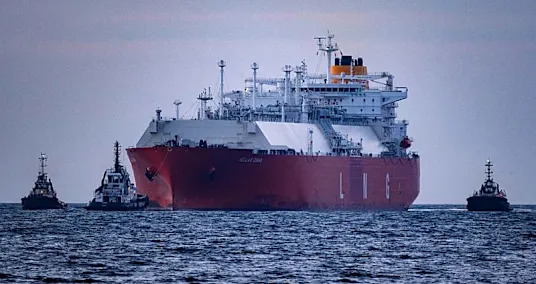
 - 2Germany's first Omani LNG shipments arrive despite Middle East disruptions
- 3Role reversal: Ukraine moves training home and exports the lessons abroad
- 4Indoor Drinking Fountains: Famous Home Advancements during the Pandemic
- 5Distributed storage Answers for Information Reinforcement




- Ergonomic Office Seats for Work spaces
- Grasping the Course of Evacuation and Extradition in U.S. Migration
- The Electric Toyota Hilux Is Finally here, But It's Not Cheap
- Congolese rape survivors search in vain for medicine after USAID cuts
- Heat Wave Fuels Massive Wildfire In Australia
- Japan prepares to restart world's biggest nuclear plant, 15 years after Fukushima
- Shredded cheese recall: Multiple brands sold at Aldi, Target and Walmart affected over potential metal fragment contamination
- The Way to Recuperation: Defeating Dependence
- Finding the Universe of Computer generated Reality: Individual Encounters